

Sistema Nacional de Gestión de Riesgo en Colombia
🌎 El Sistema Nacional de Gestión de Riesgo de Desastres en Colombia coordina acciones para proteger comunidades, organizar respuestas y fortalecer territorios frente a emergencias.
Por
Lucía Gómez
Editado por
Lucía Gómez
When you're dealing with currency conversions, especially US dollars to Colombian pesos (USD to COP), accuracy and timeliness matter. Google provides a quick way to get exchange rates, but there are a few things to keep in mind for reliable results.
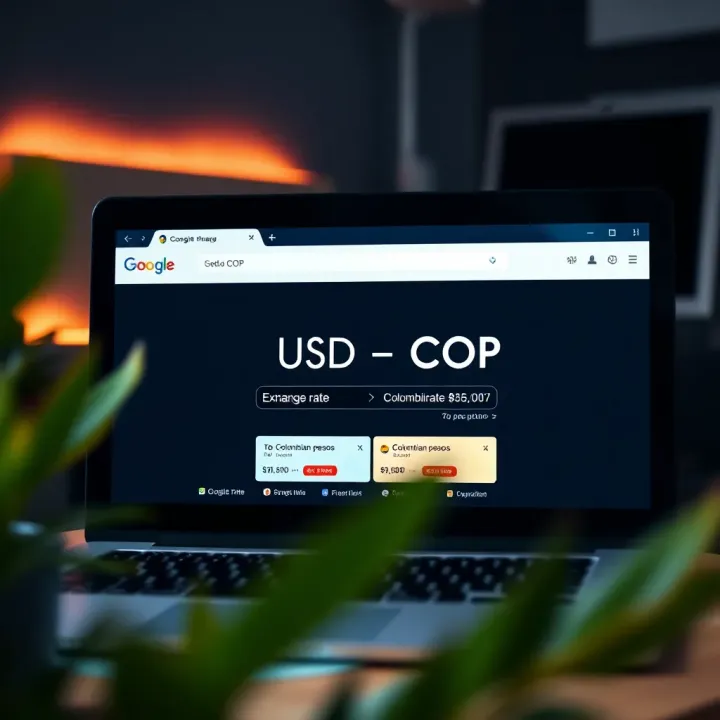
Type "USD to COP" right into Google's search bar, and it’ll show the current exchange rate at the top of the results. This rate updates frequently, reflecting the latest changes in the currency market. For example, if you see 1 USD equals 4,800 COP, then $100 would convert roughly to 480,000 COP.
But remember, these quoted rates are often mid-market rates—the middle value between what banks buy and sell currencies for. Actual exchange rates offered by banks, currency exchanges, or remittance services usually include fees and margins.
Several things affect the USD-COP rate:
Economic Indicators: Inflation levels and Colombia’s economic performance sway the peso’s strength.
Political Climate: Elections or policy changes in Colombia can create volatility.
Global Events: Oil prices, trade agreements, or financial crises alter demand for both currencies.
For traders or financial analysts, tracking these factors alongside Google's rates helps create more informed insights rather than relying on a single number.
Google is handy, but here’s where to look for precision:
XE Currency Converter: Offers historical data and rate alerts.
OANDA: Favored by traders for detailed, customizable currency info.
Bloomberg or Reuters: For up-to-the-minute financial news impacting exchange rates.
Use Google’s conversion as a starting point but verify with specialized financial tools when managing large sums.
Check the timestamp if available. Currency rates can shift within minutes.
For sending money internationally, consider fees and transfer times; sometimes a slow service offers a better exchange rate, balancing total cost.
The bottom line is: Google makes USD to COP conversion easy and fast. Still, awareness of the underlying market dynamics and complementary tools will lead to smarter decisions whether you’re investing, advising clients, or planning expenses in Colombia.
Knowing the current exchange rate between the US dollar (USD) and Colombian peso (COP) is essential for traders, financial analysts, and anyone involved in financial planning or investing that crosses borders. Google provides a quick and accessible way to check real-time currency rates, which can help make informed decisions without needing specialized financial tools. This section breaks down how to use Google effectively for speedy and detailed currency information outside of traditional forex platforms.
Typing precise phrases into Google's search bar is the fastest way to see the latest USD to COP exchange rate. For instance, entering "USD to COP" or "1 USD to COP" instantly triggers Google's built-in currency converter to appear at the top of the results page. This saves you from clicking through multiple websites or apps. Clear, concise keywords help Google recognize your intent and deliver the exact currency pairing you need to monitor.
The currency converter widget on Google's search results page is a user-friendly tool showing live exchange rates with easy input fields. You can adjust the amount in dollars or pesos to see immediate conversion results. Besides its simplicity, this widget reflects rates sourced from reliable financial data providers and updates frequently—often every few minutes. That means you get near real-time pricing, which is crucial when market rates fluctuate during open trading hours.
While Google's basic search shows current numbers, you can also review past exchange rates by searching for terms like "USD to COP historical rates." This reveals charts and graphs that track rate movements over weeks, months, or years. Understanding trends helps investors and analysts anticipate potential currency swings or assess the broader economic environment between the US and Colombia.

Google Finance offers a deeper dive into currency data beyond the quick converter. It displays exchange rate trends with more detailed graphs, news updates relevant to the currencies, and links to financial statements that may affect rates. For traders tracking the USD/COP dynamics, this platform can highlight subtle shifts influenced by political events, trade agreements, or economic reports.
On Google Finance, you can customize time frames to study exchange rate behavior over different periods — from one day to multiple years. This feature helps financial analysts and advisers identify patterns and volatility levels. For example, a rising trend in USD to COP might suggest the dollar strengthening or the peso weakening, influencing investment strategies or hedging needs.
Fast, reliable access to currency data on Google supports smarter decisions whether you’re managing international portfolios or planning day-to-day currency exchanges.
By mastering these Google tools, you save time and gain a clearer picture of the currency landscape between dollars and pesos, which is key to success in any cross-border financial activity.
Understanding what drives the USD to COP exchange rate helps traders, investors, and analysts make smarter decisions. The rate doesn’t float in a vacuum—it reacts to economic realities in both the United States and Colombia, along with external forces like global market trends.
Inflation and interest rates in the US and Colombia play a significant role in currency values. When inflation rises in Colombia faster than in the US, the peso generally weakens because the buying power of Colombian currency drops. On the other hand, if the US Federal Reserve hikes interest rates, the dollar often strengthens since higher returns attract investors. For example, if the Fed raises rates while Banco de la República (Colombia’s central bank) holds them steady, expect the dollar to gain against the peso, impacting your conversion rate.
Political stability and trade relationships also affect the dollar-peso exchange rate. Investors shy away from countries with political turmoil because it increases risks. For Colombia, events like elections or protests can shake confidence, leading to peso depreciation. Conversely, strong trade ties with the US, including agreements or increased exports, tend to support the peso’s value. Keep in mind, changes in trade policies, such as tariffs, can alter how easily goods flow between countries, influencing currency demand.
Commodity prices matter a lot, especially for Colombia. Oil and coffee prices often sway the peso because these exports are vital to Colombia’s economy. For instance, a slump in oil prices typically hits Colombia’s revenue, which can weaken the peso. On the flip side, when global coffee demand surges, the peso may strengthen due to higher export earnings. Traders watching these markets will notice how fluctuations quickly ripple through exchange rates.
Global economic shifts have broader impacts. Events like a US recession or global trade tensions can prompt investors to seek safe-haven currencies like the dollar. This behavior pushes the peso down during uncertain times. Additionally, shifts in emerging market sentiment or capital flows can cause rapid changes. For example, if foreign investors pull money from emerging markets, the peso often suffers. Staying aware of these patterns aids in anticipating currency movements.
The bottom line is that exchange rates reflect a mix of domestic and international factors. Monitoring economic indicators, political events, and commodity trends provides a clearer picture of what drives the dollar-peso rate at any moment.
Understanding these key factors gives you a practical edge when converting dollars to Colombian pesos, especially if you're tracking the rates via Google or financial platforms.
When converting US dollars to Colombian pesos, relying solely on Google's exchange rates can be convenient but sometimes misleading. Different platforms may show slightly different rates due to variations in update frequency, data sources, and fees hidden in their calculations. Comparing Google’s rates with other sources helps traders, investors, and financial analysts make informed decisions and avoid surprises.
Timing and delay in rate updates play a big role in rate differences. Google typically updates its currency converter multiple times a day, but other platforms might refresh their data more or less frequently. For instance, OANDA updates its rates every 15 seconds during market hours, capturing minute-by-minute fluctuations, while Google might lag slightly behind. That means if you’re checking rates for a transaction timed precisely, Google's rate might already be outdated by a few minutes.
The practical side? If you’re sending money or trading currencies in real time, even small delays can affect the amount you’ll receive. This calls for checking multiple platforms to catch the most current rate, especially during volatile market hours.
Another factor is the source of exchange rate data and fees included in the conversions. Google often bases its information on interbank rates sourced from financial data providers, reflecting wholesale prices available to banks and large institutions. However, these rates don’t include conversion fees, spreads, or service charges you might face at banks or money transfer services.
Some platforms explicitly incorporate typical transaction fees into their displayed rates. For example, XE.com might show rates more reflective of what you’d get at consumer-facing services, including small margins. This matters because a quoted rate might look favorable but hide extra costs you uncover only after starting the transaction.
XE.com, OANDA, and other trusted sites provide exchange rate information with a focus on accuracy and real-time updates. XE.com is especially popular for international money transfers, offering clear views on mid-market rates and fees. OANDA, used widely by traders, delivers highly granular rate updates and customizable charts for tracking dollar-to-peso movements over time. These sites often support advanced tools like API access and customizable alerts, valuable for financial analysts needing precise data.
Their practical relevance shines for those seeking not just quick estimates but detailed insights and transparent rates with potential fees disclosed upfront.
Mobile apps for on-the-go conversions have become indispensable for travelers and professionals managing currency exchanges while away from a desk. Apps from XE or Currency offer instant conversion with offline capabilities, historical graphs, and alert features that notify users when rates hit a target point. These features help you time exchanges better and avoid poor rates unexpectedly.
Additionally, these apps offer quick currency conversions in real-time during trips or meetings, helping you budget your Colombian pesos more effectively based on accurate, up-to-the-minute information.
Comparing rates across platforms isn’t just about finding the best number—it’s about knowing the context behind those numbers, including update timing, data sources, and transaction costs, so you get realistic and useful information for your financial decisions.
Getting a precise and current conversion rate between US dollars (USD) and Colombian pesos (COP) is essential, especially for traders, investors, and anyone involved in financial planning. Exchange rates fluctuate constantly due to market dynamics, so relying on outdated or incomplete information can lead to costly mistakes. Understanding how to avoid common pitfalls and recognizing the real costs involved gives you a clearer picture of your currency conversion impact.
Many online currency converters display an exchange rate without showing when that rate was last updated. This timestamp is critical because rates can shift within minutes during trading hours. For example, if you check Google’s currency widget late in the evening, the rate may reflect the last market close rather than the current one in the following trading session. Failing to verify the timestamp can result in using stale data, leading to miscalculations in budgeting or speculative trades.
The rate you see on online platforms often excludes hidden fees or surcharges charged by banks, exchange houses, or money transfer services. For instance, if Google shows that $1 equals 4,000 COP, the actual amount you receive after fees could be notably less. These service providers may add a margin or flat fees, affecting your net amount. Keeping this in mind helps you avoid surprises during transactions and plan accordingly.
Banks and currency exchange services typically don’t operate at the published mid-market rate. Instead, they apply their margins to make a profit. For example, a bank might offer you $1 for 3,950 COP instead of the 4,000 COP rate you saw online. These margins vary between institutions and services, so comparing offers is smart when converting large sums. Understanding this difference can influence when and where you convert dollars to pesos for better value.
Beyond exchange rates and margins, transferring money internationally usually involves additional costs such as wire transfer fees, service charges, and sometimes taxes depending on the jurisdictions involved. Say you send $1,000 through a popular platform; after a $30 wire fee and a percentage-based conversion margin, the recipient might receive noticeably less. Being aware of these extra costs helps you calculate the true cost of sending money and adjust your transfer amounts or choose alternative services if necessary.
Bottom line: The exchange rate is just one piece of the puzzle. To get an accurate USD to COP conversion, check rate timestamps, anticipate fees, and understand the full costs involved in currency exchange and transfers.
Accurately estimating daily expenses is key when traveling to Colombia. Currency conversion rates can fluctuate, sometimes more than you expect, so relying on the current Google conversion rate helps you plan realistically. For example, figuring out how much your hotel, meals, transport, and leisure activities will cost in pesos ensures you don’t end up short on cash. Budgeting in dollars without checking the peso's value can make your trip unexpectedly expensive or leave you with leftover funds that you could have used.
Managing local currency cash and cards goes hand-in-hand with your budget planning. It's worth knowing that not all places in Colombia accept foreign cards, and some establishments might add extra fees for card payments. Carrying an appropriate amount of Colombian pesos is handy for small purchases like street food or taxis where cards aren't standard. Meanwhile, using a debit or credit card with low foreign transaction fees for bigger tickets can save money. Keep an eye on daily spending in both pesos and dollars to stay on track.
Choosing the right money transfer service makes a big difference when sending dollars to Colombia. Services like Wise, Remitly, or Xoom often offer competitive rates and low fees compared to banks, which means more pesos at the other end. Google’s real-time exchange rates can guide you in deciding when to make a transfer, but remember, transfer services may offer slightly different rates and charge fees that affect the total delivered.
Strategies to minimize currency loss are crucial for anyone moving money abroad regularly. Locking in favorable exchange rates through forward contracts with financial services, or timing transfers when the peso strengthens against the dollar, can save significant amounts. Additionally, consider transferring midweek rather than weekends when rates tend to be less favorable. Avoiding unnecessary conversions and understanding all fees upfront protects your funds from disappearing into hidden costs.
The bottom line is, whether you're traveling or sending money internationally, knowing how to convert USD to COP accurately on Google and considering the practical factors involved can keep your financial plans on solid ground.
🌎 El Sistema Nacional de Gestión de Riesgo de Desastres en Colombia coordina acciones para proteger comunidades, organizar respuestas y fortalecer territorios frente a emergencias.

📈 Descubre qué son las opciones binarias en trading, cómo funcionan, sus ventajas y riesgos para operar con seguridad en Colombia y sacarles provecho. 💡

🔍 Descubre cómo implementar un Sistema de Gestión de Riesgo en tu empresa para identificar amenazas, proteger recursos y asegurar la continuidad operativa en Colombia.

📈 Aprende a aplicar estrategias de swing trading para aprovechar tendencias a corto y mediano plazo en el mercado, con consejos y análisis de riesgos claros.
Basado en 14 reseñas